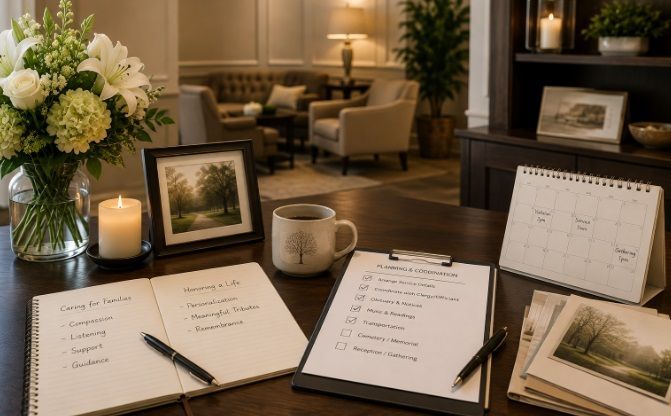
Meeting with a funeral director can feel unfamiliar, especially when a family is making important decisions soon after a loss. When families meet with
funeral homes Dartmouth, MA, the arrangement meeting provides a structured opportunity to discuss wishes, gather necessary information, and understand what needs to happen next. We believe knowing what to expect can make the conversation feel more manageable. Rather than expecting families to arrive with every decision already made, an arrangement meeting creates space for questions, thoughtful choices, and clear guidance.
We approach this conversation as both a planning meeting and an opportunity to listen. Families may have firm preferences, existing plans, religious or cultural traditions, or very little idea of where to begin. In the middle of those different circumstances, New Day Cremation & Funeral Care helps organize the details and explain available choices in understandable terms.
The goal is to give families enough information to make decisions that reflect the person being remembered while keeping the planning process organized and respectful.
Beginning With the Family's Priorities
An arrangement meeting usually starts with a conversation about the person who has died and what the family wants the service to accomplish. A funeral director may ask about personal wishes, traditions, previous arrangements, and the type of gathering family members are considering. This conversation helps establish a direction before individual details are addressed.
Families do not need to arrive with a complete plan. Some people know exactly what they want, while others need help understanding the possibilities. We can explain how different service formats work and how various decisions fit together.
The meeting also gives family members an opportunity to identify what matters most to them. That might include creating time for relatives and friends to gather, incorporating a religious tradition, arranging a graveside ceremony, or finding meaningful ways to represent someone's personality. Establishing those priorities early helps the remaining decisions follow a clearer path.
Reviewing Essential Information and Documents
Part of the arrangement process involves gathering information needed for records, authorizations, and coordination. Families may be asked to provide personal information about their loved one and any documents relevant to previously stated wishes or arrangements.
For many families, this meeting follows the initial conversation with the funeral home. Understanding the
first call process can help explain why some information has already been collected while other details are addressed during the arrangement meeting. The first call begins professional care, while the later meeting provides more time to discuss services and documentation.
We encourage families to ask questions whenever something is unfamiliar. Funeral planning includes terminology and procedures that many people encounter only a few times in their lives. A good arrangement of conversation should make those details easier to understand rather than expecting families to already know how everything works.
Discussing the Type of Service
Once the family's priorities are understood, the conversation can turn toward the ceremony or gather itself. There are different ways to honor a life, and the right choice depends on personal wishes, traditions, and what feels meaningful to those involved.
A funeral director can explain the differences among available formats and help families understand how visitation, a funeral ceremony, memorial gathering, or graveside service may be organized. The discussion may also cover the sequence of events and the people who could participate.
This is where personalization often becomes clearer. Families may want photographs, meaningful music, treasured belongings, readings, or stories incorporated into the gathering. Those details can help a service reflect the individual rather than feeling routine. We believe personalization works best when it grows naturally from the person's relationships, interests, values, and life story.
Coordinating the Practical Details
A meaningful service also requires careful coordination behind the scenes. During the arrangement meeting, families can discuss timing, transportation, participants, and other logistical considerations. The funeral director helps bring those pieces together so everyone understands the plan.
Families consider different
funeral service options can use this part of the conversation to understand what each choice involves. Our website describes several service approaches and emphasizes that families have individual needs, which is why understanding the available formats is an important part of planning.
Scheduling may also depend on family availability, clergy or celebrants, cemetery coordination, and other practical factors. Discussing these considerations during the meeting allows the funeral director to identify what needs to be coordinated and explain the next steps. Families can then leave with a clearer picture of what has been decided and what still requires attention.
Asking Questions Before the Meeting Ends
An arrangement meeting should provide answers, but families may naturally think of new questions as the conversation progresses. We encourage people to speak up about anything that remains unclear. There is value in understanding why information is needed, what happens next, and who will handle each part of the process.
Before the meeting concludes, the funeral director can review major decisions and confirm important details. This final review helps reduce misunderstandings and gives family members another opportunity to raise concerns.
It can also be helpful to write down questions before arriving. When emotions are high, even simple questions can be easy to forget. Bringing notes or having another trusted family member participate can make it easier to remember important points. The purpose of the meeting is not to rush to decisions. It is to create an organized path forward while giving the family knowledgeable guidance during an unfamiliar experience.
A funeral arrangement meeting can replace uncertainty with a clearer understanding of the decisions ahead. Families working with funeral homes Dartmouth, MA can expect the conversation to address personal wishes, documentation, service choices, meaningful details, and practical coordination. At New Day Cremation & Funeral Care, we want families to feel informed and respected throughout that process, with time to ask questions and understand their options. Families who would also benefit from ongoing
grief support resources can find guidance for the days surrounding a loss and beyond. For thoughtful assistance with an arrangement meeting and the next steps involved, call
(508) 992-5486 to speak with our caring team.